Saturday, June 13, 2015

Dream Big

Water Taxi


One of the best deals in Ft. Lauderdale is the water taxi. The fare is $26 per person for an all day ticket. For us, this was less than renting a car, no worries about parking, no worries about traffic and okay to have a couple of glasses of wine with the evening meal. In fact, they somewhat encourage drinking on the water taxi. They will even stop at the fuel dock long enough for riders to run in and buy a six-pack.


Gas Station

The fuel dock


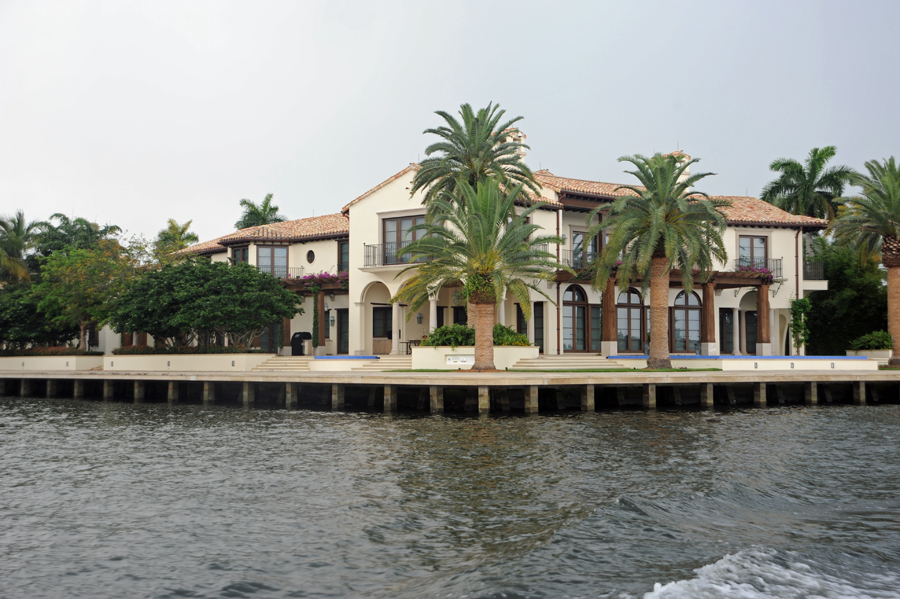
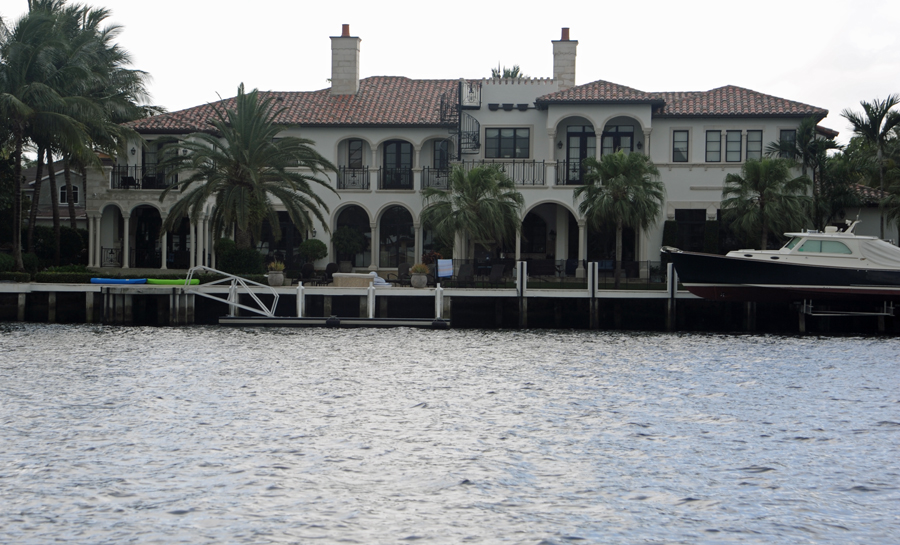
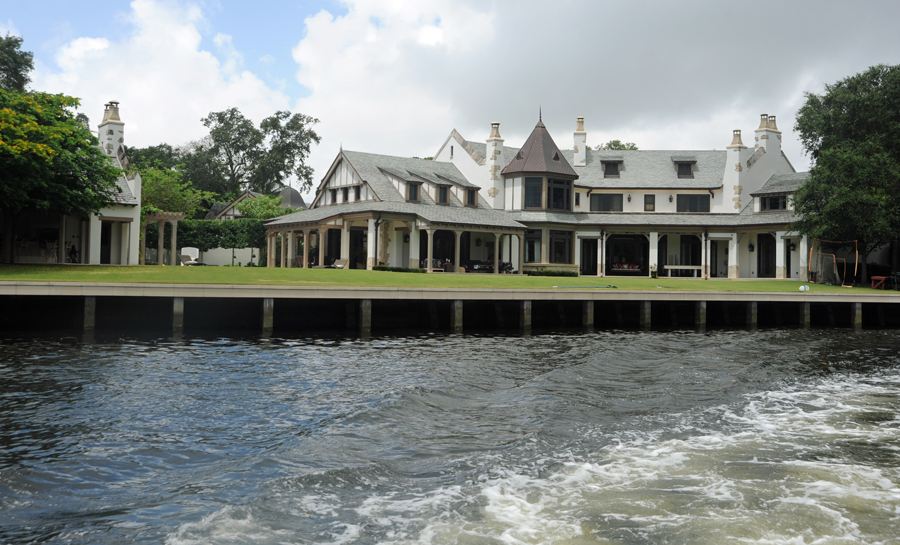
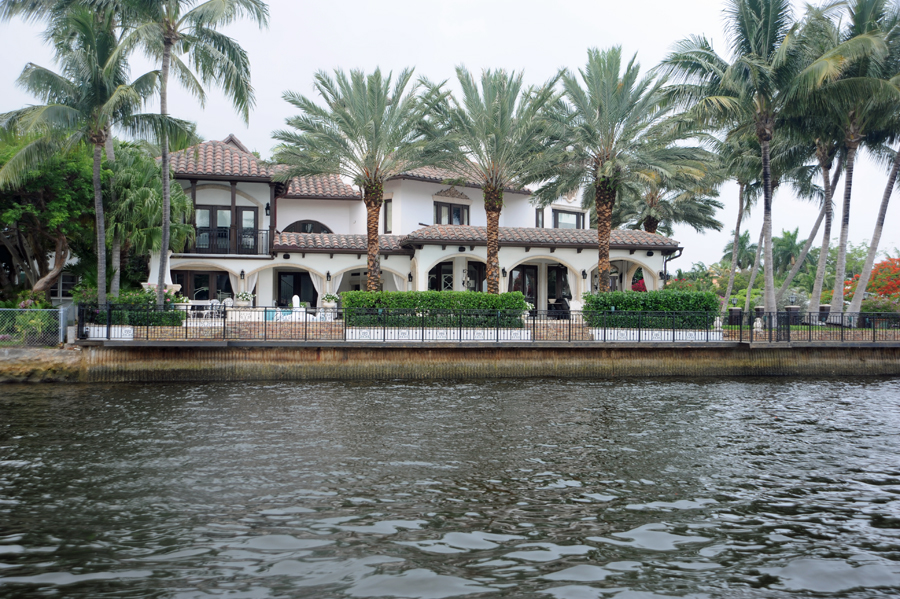
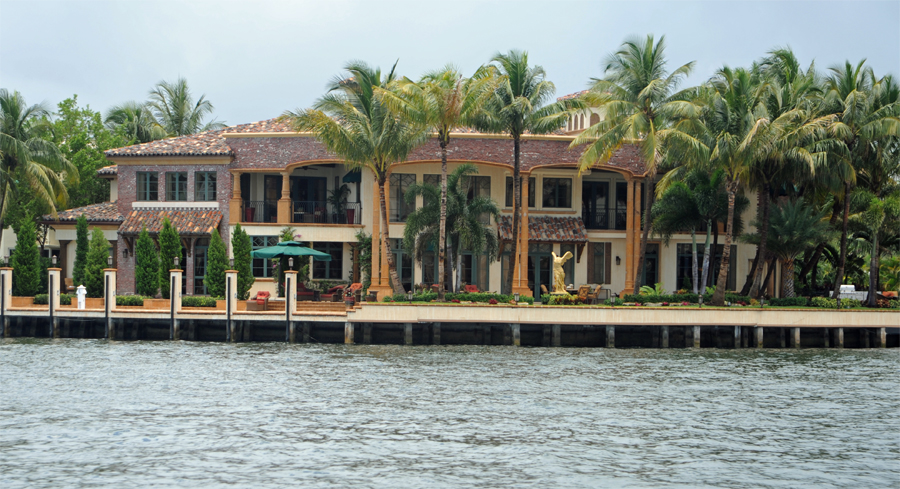
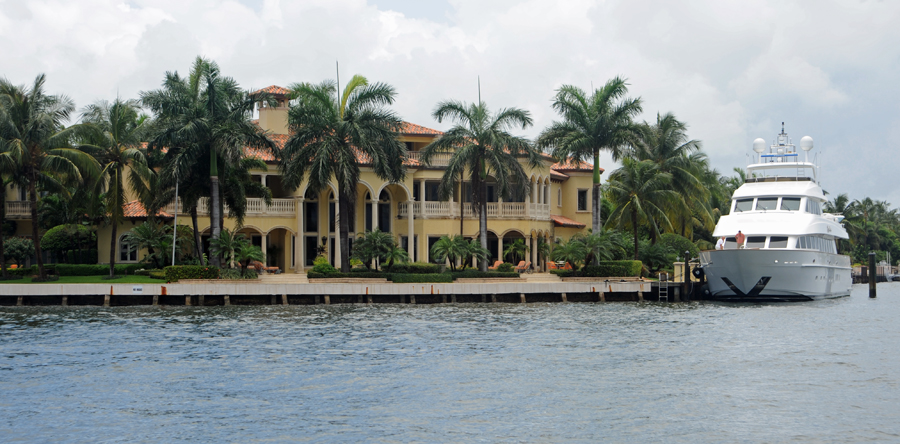
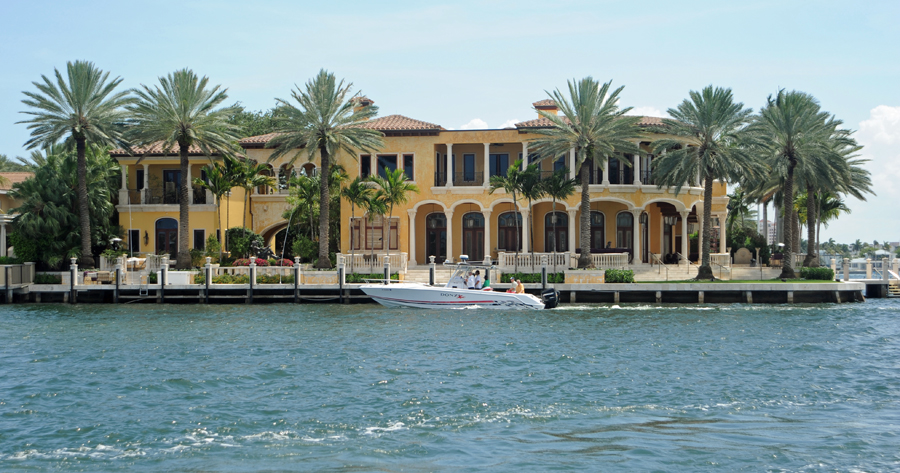
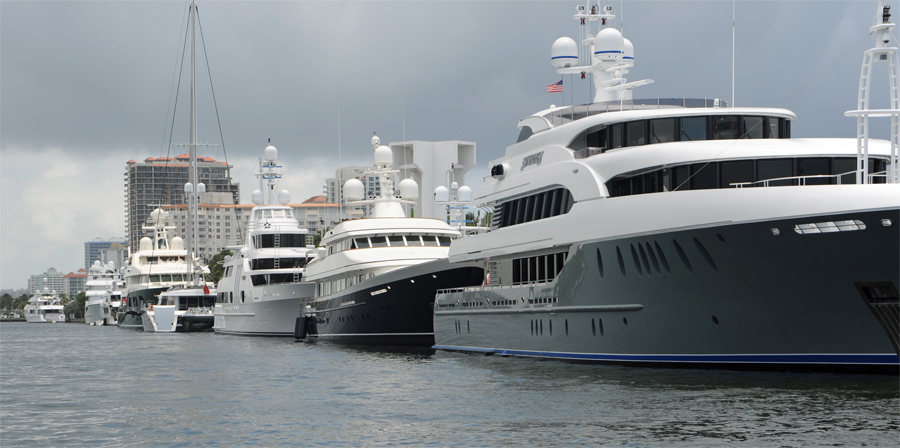
The water taxi runs to the major areas of shopping, restaurants, marinas, hotels and beaches. But, perhaps the fun part of the taxi is looking at the homes and mega yachts lining the ICW (Inter-Coastal Waterway) that runs through Ft. Lauderdale.


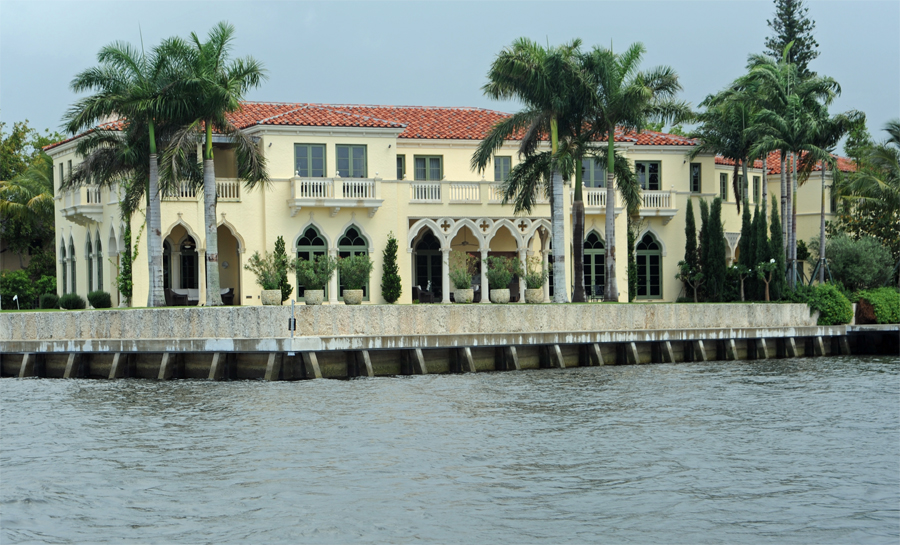
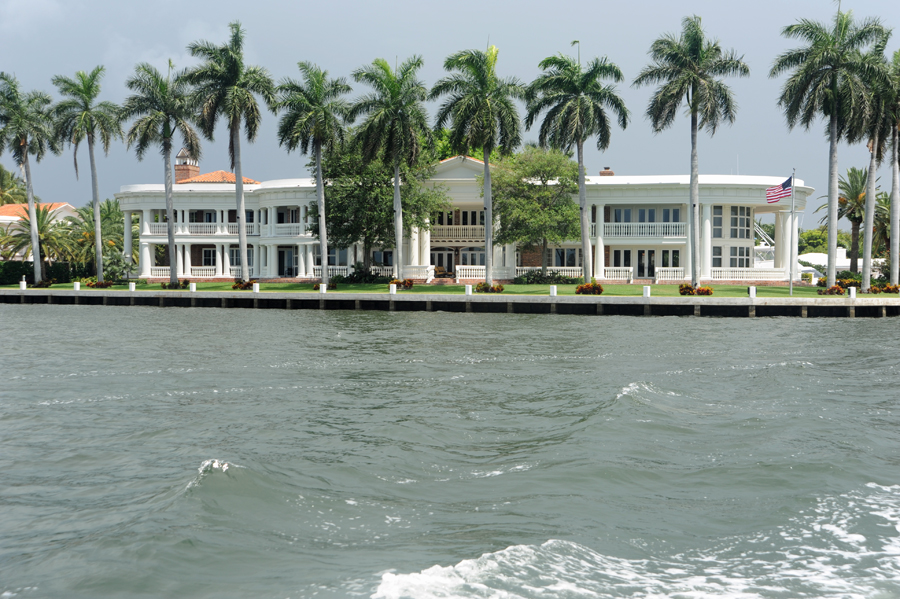
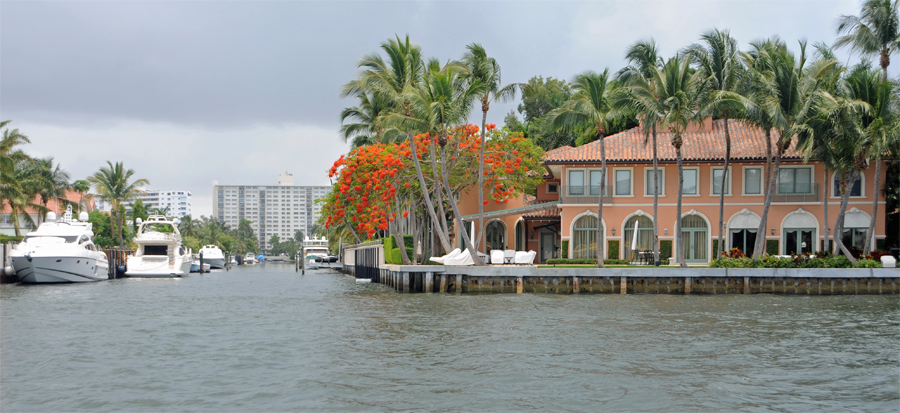
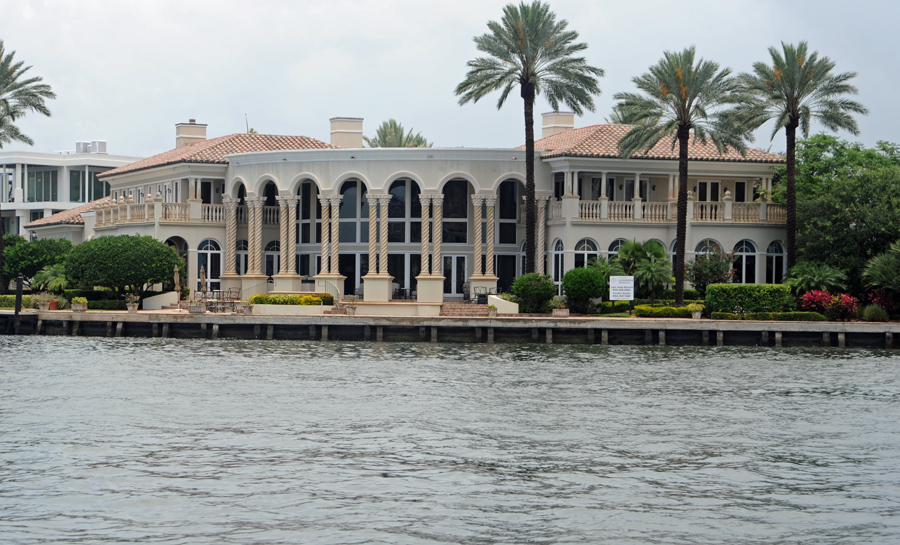
When riding in the evening hours we notice that most had very few lights on. It dawned on us these homes are second or third homes for the owners. It made us wonder what their full time home looks like. The larger homes pictured here are so expensive they are out of the price range of even the largest lottery jackpot winners. They are owned by business tycoons and company founders who have amassed a fortune. The homes probably complement a collection of properties.


There is a small part of me shaking my head at the gap between the haves and have nots. This is wealth beyond most people’s imagination. But, I figure it’s their money, they can do whatever they please with it. I like to think most people in this caliber of wealth are charitable and give back to a society that has rewarded them for their risks and business ventures. And besides, it makes for a fun ride on the water taxi looking at the mansions. I mean, who wants to take a boat ride through the ghetto, right?


One truth to Ft. Lauderdale; no matter how big your house or boat is, someone else’s is bigger (or soon will be). Enjoy pictures of our ride on the water taxi. Keep in mind these are all single family homes (not condos or hotels) and private yachts.


(click any picture to start a slide show).


House 1


House 2


House 3


House 4


House 5


House 6


House 7


House 8


House 9


House 10


House 11


House 12


House 13


House 14


House 15


House 16


House 17


House 18


House 19


House 20


House 21


House 22


House 23


house 24


House 25


House 26


The Jungle Queen tour is so hokey it’s fun.


Jungle Queen


A party on the sand bar.


Party on the sand bar


If you thought the houses were big, here are the boats…


Yachts 1


yachts 2


yachts 3


yachts 4


yachts 5


The Chart House Restaurant

The Chart House Restaurant


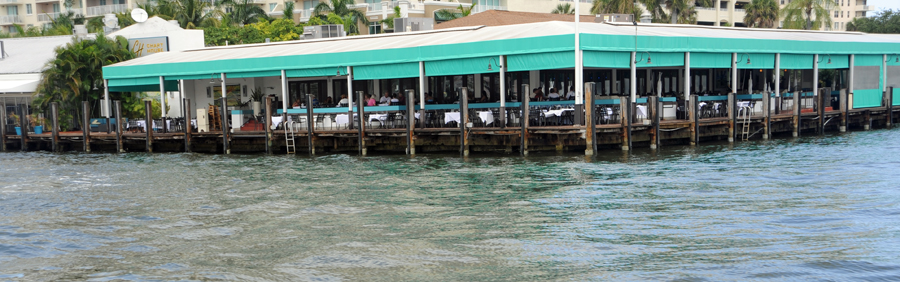
Cindy and I traveled often to Ft. Lauderdale and the Chart House was one of our favorite restaurants. We sat many times on the outside dock enjoying fabulous food watching the yachts pass on the ICW. As we watched the boats, we would say, “We sure wish we could afford a boat”. Now, we pass by the Chart House on a boat and say, “We sure wish we could afford to eat there”.


Dream Big

This Stinks!

“This stinks!” was the common phrase uttered after leaving Key West.


While sailing motoring from Tampa Bay to the Dry Tortugas, the winds were too light to sail and we were forced to listen to the diesel engine for 32 of the 36 hour trip. When leaving the Dry Tortugas for Key West, we had 15 knot winds on the nose and never had the opportunity to raise the sails causing another ten straight hours of diesel sounds.


We planned to leave Key West for a three day passage north up the east coast. The weather forecast: Winds from the east at 10 knots for first the two days and then from the southwest for the third day, seas 1-3 feet for all three days; A perfect weather window for some laid back sailing. With the benefits of the strong current from the gulf stream* we should make excellent time. I kept telling Cindy we were in for a great three days of sailing and at the end of the three days we were going to high-five each other and complement ourselves on our chosen lifestyle as sailing cruisers. The weatherman lied.


We knew we had to motor, oh joy, for the first 12 hours heading east out of Key West before our turn to the northeast in the Florida Straits. But, the thought of being able to raise the sails that evening as we turned to the northeast and enjoy some great days of light wind sailing made the drone of the diesel tolerable. Alas, as the day progressed, the winds shifted to the Northeast and increased to 20 knots. We made our turn and still had head winds. “This stinks!”


As evening came upon us the winds continued to increase and so did the waves. Darkness set in. We were still motoring, had head winds, spray flying over the boat and the boat was making bone shuddering crashes into the waves. We had planned a speed of 7 knots for this leg of the trip. Due to the waves and headwinds, we were averaging 4 knots. We were using more fuel than planned and our three day trip was looking closer to a full 4 days, or more. This was not good because we knew a weather front was going to push through on the fourth day. “This stinks!”


At 2 am, we had been motoring for 20 hours. The winds had increased 20 knots gusting 25. Normally we would have changed direction. But, we had reefs to the left of us and the now dangerous gulf stream to the right. Our only options were to turn back or keep going. Cindy rightly recommended we should slow down to stop some of the pounding. This proved to be an excellent decision. The ride became a little more tolerable and we managed to grab some short naps. From the onset of our cruising adventure, we have now been at sea for a total of about 45 hours. We have managed to sail for only 4 of those hours. “This stinks!”


Finally at 4 am the winds subsided to 15 knots and we were able to turn a little more to the north and raise the sails and kill the engine. Hallelujah! As the wind filled the sails, we heeled slightly and began to cut through the waves instead of crashing into them. We picked up speed but the damage was already done to our schedule. There was no way we could make our destination prior to the forecasted weather front. And, we have used more fuel than planned. We needed to abandon our plan. We agreed we’d look at our options after a little sleep. “This stinks!”


At 8 am winds eased a little more and we were sailing, yes sailing, with full sails raised going north about 5 miles off the South Miami coast. Looking at charts, we are familiar with Ft. Lauderdale. This is where we purchased Cream Puff and we knew the entrance channels, bridges and marinas. We called a few marinas to see if they had space for a couple of nights. Pier 66 had space. They also have a fuel dock. They were about 4 hours away. We abandoned our plans and figured this was our best option. We changed course and headed for Ft. Lauderdale. The next four hours gave us some great sailing. We were too tired to enjoy it and took advantage of the calmer conditions to take turns napping.


Miami (we think)

Miami (we think)


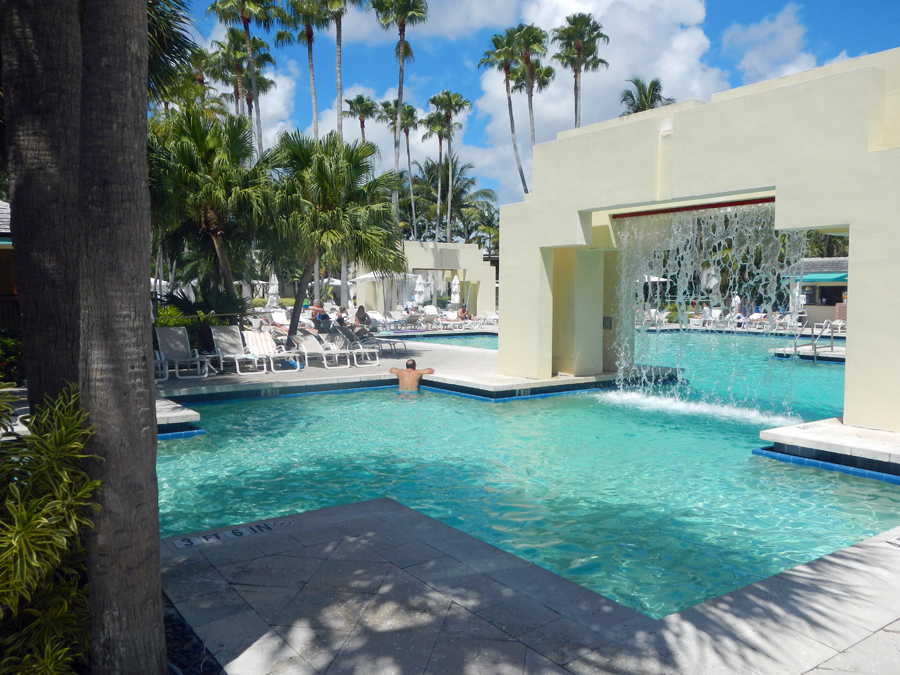
We are safely in Pier 66 Marina and Resort. This place is awesome! They have restaurants, swimming pools, a spa and new docks. If we call room service, (I am not making this up) they will even bring food and wine to the boat. We are going to sit here for a few days and remember why we are cruising. This doesn’t stink.


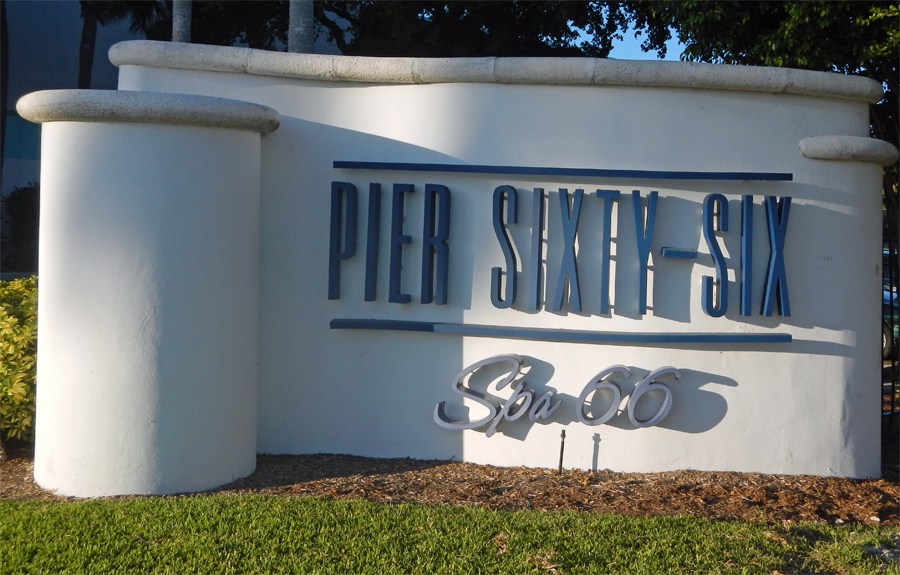
Welcome to Pier 66

Welcome to Pier 66


Pier 66 from atop 17th Street Bridge

Pier 66 from atop 17th Street Bridge


The Big Boys

The Big Boys


Cream Puff in her slip - At a mere 53 feet, we may be the smallest boat here!

Cream Puff in her slip – At a mere 53 feet, we may be the smallest boat here!


Pier 66 from 17th St Bridge

Pier 66 from 17th St Bridge


Pier 66 Pool Area

Pier 66 Pool Area


*The gulf stream is a strong current off the eastern coast of the USA. The current starts in Antarctica and extends in the North Atlantic toward Europe. The current off Southeast Florida is about 10 miles from the coast line and can easily run from south to north at 3.5 knots. If winds have any aspect of a northerly direction against the current, huge breaking waves and confused sea states occur creating very dangerous conditions. Even the most seasoned sailors will respect the gulf stream currents.


This Stinks!

Key West - Again

Have you ever sat in a bar or restaurant while a band set up? Our initial thought was, oh rats, it’s going to get loud. We were drinking our adult beverages waiting for our food to arrive watching the set up and listening to the standard “check one two three” over and over. Then, they started to play. And, play they did. Normally, I feel a little sorry for the musicians because most people ignore them. The level of noise goes up as people scream over the music to be heard. But, the opposite happened. The room went quiet and at the end of the song the band had everyone’s attention. Yes, they were that good!


The last picture taken with our cell phone (read on).

The last picture taken with our cell phone (read on).


Todd Doerfel, the banjo and dobro player was former state champion musician. His wife, Angelica Grim, and guitar player held her ground and sang lead. The bass player, Joseph Doefel, well, bass players are just cool. We wound up hanging around for a few drinks and enjoyed the awesome entertainment.


Our visit to Key West, FL was a little unplanned. We were low on drinking water and Key West made the most sense. We would like to have stayed an extra few days in the Dry Tortugas but our water-maker issue forced us to move on.


Key West is an expensive stop. The marinas there are horribly pricey. We had to pay about $250 per night for our docking. Ouch! And, as luck would have it, the weather was not great so we had to stay a couple of extra nights. On the bright side we took the opportunity to do a little maintenance on Cream Puff. I changed the engine oil and scoped out a disposal for the old oil. Yep, I saw parts of Key West others fail to hunt out.


The Key West Oil Recycle Center - Not a top tourist attraction

The Key West Oil Recycle Center – Not a top tourist attraction


Diver's Direct

Diver’s Direct


I purchased some jerry cans to ensure we always have some emergency drinking water. We stocked up on perishable grocery items at a great little market. We purchased a hookah set up and diving tank so I could change the zinc on the rudder (underwater). The best part was all we needed was within walking distance of the marina. We used the marina laundry facilities to get our clothes clean. We did take some time to smell the roses. During laundry loads we sat by the pool sipping a couple of cold drinks. I also washed our cell phone by jumping in the pool with it in my pocket. Ooops! We’re still trying to dry it out and see if it works. Good job we have plenty of rice on board.


It’s time to move on. We’ll go broke if we stay here any longer.


Hand rolled cigars

Hand rolled cigars


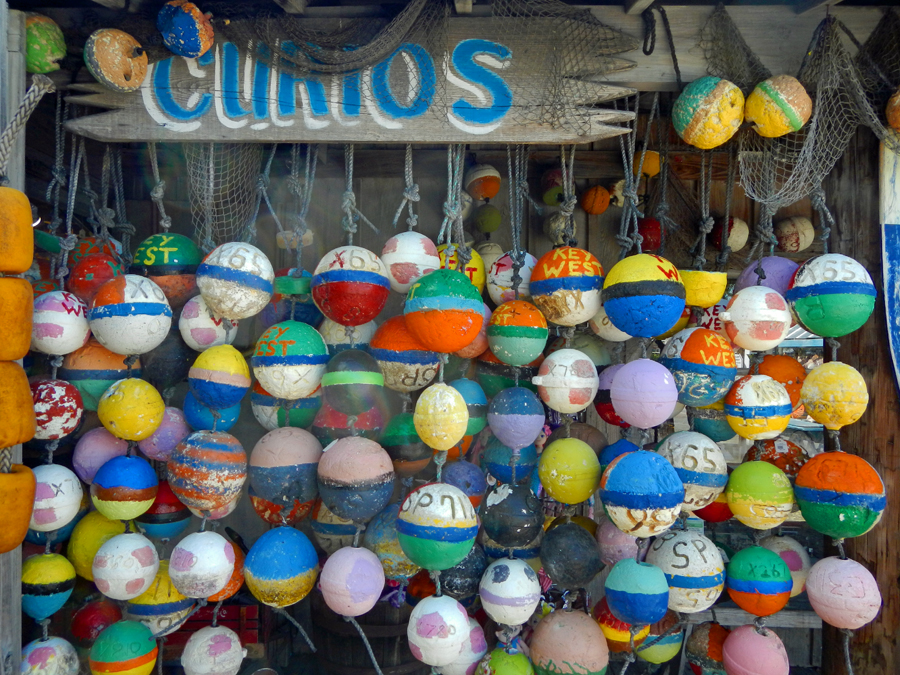
Colorful fishing floats and bouys

Colorful fishing floats and bouys


Very nice!

Very nice!


***********************************


For other great pictures and a good story, check out our trip to Key West a couple of years ago Key West. This post and pictures was later published in a Sailing Life magazine (I hope they fixed all the typos).


Sailing Life Cover - March


Key West - Again

H2-O-M-G

This is the most expensive glass of water ever. Here’s why. Prior to leaving St. Petersburg, I changed all the filters and membranes in our water maker (French). We have two water makers. One is original and installed at the Amel factory and runs off the house batteries. The second was added by the previous owner and runs off the engine (American made). When we spent some time with the previous owner during our purchase process, he referred to the water makers as French and U.S. That stuck.


Water makers take salt water from the ocean and squeeze it through a series of filters (membranes) using a high pressure pump. The process is really simple. But, membranes are finicky little buggers. They have to stay wet. Let me rephrase that. They like to have water flowing over them. If the water stays still for too long, say over 30 days, nasty stuff grows. They like ocean water free of sand and silt. This means they produce the best drinking water when far away from land. They do not remove bacteria. So when running our water maker, we need to be away from marinas, polluted waters or spillage areas such as a city where oil and grim is washed into the water. They also do not like chlorine, petroleum, or just about any other element of the periodic table.


The first thing I should have told you about water makers is they are awesome when cruising at sea. When you think about the factors limiting time on the ocean, water is top of the list. Food is there if they are biting (fish), and wind is free if it is blowing. Being able to make fresh water out of salt water is a luxury second to none. But for as wonderful as these devices are at sea, they are completely a royal pain while near land.  If a water maker is to be idle for during an extended absence of salt water cruising, it can be pickled. Picking is a process of adding chemicals to the system in a vain attempt to prevent bacterial growth while theoretically preserving the membranes. Our U. S, water maker is currently pickled. I can only deal with the idiosyncrasies of one water maker at a time and keep my sanity. I started with French.


In order to ensure the best quality of water, I basically cleaned the entire system and replaced every seal, o-ring, filter and membrane. This cost a whopping $1,500.00. I did this during our last week at St Petersburg so the unit wouldn’t sit idle and creating wonderful stomach upsetting organisms. The instructions with the new membranes said to run the water maker in sample mode for the first hour. Sample mode means none of the fresh water made goes into our water tank but instead is pumped over the side and discarded.  I figured, we would do this on the way to the Dry Tortugas. There is a good reason they are called dry. But hey, having full tanks of water all the time means we can stay as long as we want, do laundry, take long showers, provide water to other cruisers and float rubber ducks in our hot tub (no, we do not have a hot tub). But no, this did not happen.


Fresh water from salt water - yum!

Fresh water from salt water – yum!


After running for an hour, I sampled the water using a testing meter. Mmmmm! Almost pure. Only 215 parts per million of salinity. This is about 3 times better then water from your tap. Above is a picture of the first and only glass of water. I had a feeling something bad was going to happen so I did not start topping off the tanks just yet. Why? Because projects on a boat never go smoothly. This is one of life’s certainties, like death and taxes. And, this project was gong way too smoothly. I was cautiously optimistic. Then Murphy entered, as expected. All we can make now is clean salt water. We were very fortunate that we did not start to add the water to our on board tanks. We could have completely contaminated our drinking water. This prompted me to put two 5 gallon jerry cans on our shopping list. We will fill these with fresh water and stow safely away. This way, we will always have some emergency water if our tanks become contaminated.


This was our only glass of water from the $1,500 rebuild. It looks like I now need to rebuild the system again! Think about this story next time you complain about the price of a bottle of water.


H2-O-M-G

"If I had a Shotgun..."

“If I had a shotgun, I’d shot a hole in the bottom of this boat”, Cindy, said upon our arrival in St. Augustine FL.


As we continue our trudge up the east coast, we have been plagued with problems. We sort of expected some issues as Cream Puff has not been sailed hard in quite a while. We didn’t really think it would be this bad. On our last 3 days of sailing our refrigerator door fell off (yes, you read that correctly), our bow thruster started to leak, our single sideband antenna fell off, our new tri-color LED navigation light (used at night so other ships can see us) quit working. Our control cable for the transmission gear shift broke. This means we have no gears. And, our ship’s computer will not reboot. Can you see a pattern developing here? Sail for 2-3 days and then do repairs for 2-3 weeks. Other than that, things are going well.


I am not in a mood to be messed with. I wrote to Defender Marine Supply and told them the $300 Aqua Signal Series 34 LED Tri-Color / Anchor Navigation Light they sold me quit working after only 2 months. I have nothing against Defender. They are a top notch company with truly excellent customer service. They wrote right back saying there are unable to exchange the product until I talk to Aqua Signal and did some “trouble shooting” (Aqua Signal’s policy, not Defenders). I am not an idiot. I know how to connect a light bulb.  And, this one is located at the top of the mast. What do they expect me to do? Call them once I get to the top of the mast and say, “Nope, it does’t work, duh”. Let’s just put a stop to this paragraph because I could really get on a rant. We’ll cut it short and say I reached out to Aqua Signal and told them what I thought of their garbage product and its shoddy workmanship, made in China, plastic, overpriced trash. I told them Defender should be embarrassed to represent this line and I planned to write this to Defender. Harsh? Perhaps. Like I said, I’m in a mood. They are sending me a new light.


I am not kidding when I say the refrigerator door fell off. Cindy was below. She called up and said the door came off its hinges. As usual, we are getting pounded by waves (sailing is such fun) and I thought I didn’t hear correctly due to the howling winds. I looked below. Sure enough, she has a puzzled look and is holding the door wondering where to put it. Upon inspection, we find the lower hinge has broken but can be fixed with a little work and imagination. As we think about this, this refrigerator has lasted 15 years, not bad! The expensive GE Monogram ones in our house only lasted about 7 years before starting to fall apart. So, I guess we should expect some misbehavior from a 15 year old once in a while. In all honesty, we haven’t really been very fond of this unit as we feel it opens the wrong way and the food in it never seems to stay cold. Hey, maybe it had something to do with the door. It’s cool but not cold. We started to think about replacing this unit for a unit with two pull out drawers allowing access from both sides. The new units are expensive. We decided to fix this one, for now. If it gives us anymore trouble, it’s a goner. Wait and see; because we’re both looking for an excuse to replace it, it’ll now last forever.


During the middle of the night, our “water in the boat alarm” sounded. If something is going to go horribly wrong on a boat, it’s going to happen in the middle of the night. And, nothing will make sure you are more fully awake than the alarm bell alerting the fact there is water inside the boat. We both grabbed flash-lights and began pulling up the floors to find the source of the water. It didn’t take long to find the retractable bow thruster (a forward retractable propeller that helps move the boat from side to side when docking) had a small leak. It wasn’t too much to worry about but we kept a close eye on it. About a pint of water leaked in and was splashing up against the alarm sensor. On Amel sailboats, they have a very unique bow thruster. It is the only system I know of that can be fully removed and serviced while the boat is still in the water. So on the bright side; at least we do not have to pay a boatyard $1,000 to pull us out of the water. Nope, we can use that money to buy a new refrigerator when it sasses us.


If you are a regular reader of this blog, you know I loathe West Marine with a passion. They have given me yet another reason to gripe, and once again, I’m in a mood. Our mount for our 23’ single sideband radio antenna fell apart. The mounting bracket was a West Marine brand purchased new from West Marine less than 18 months ago.


The key bolt holding the unit together came undone causing the antenna to separate from the mount. This could have been easily prevented if the manufacturer contracted by West Marine had used 3¢ worth of loctite to ensure the security of the bolt. Or, it would have been nice if in their instructions they inform the customer of their cheapness and suggested the end user add some loctite if they wanted to keep their antennae upright. Because of this we almost lost a $600 antenna. I say almost because, and I don’t know how we managed this, we salvaged all the parts of the base and the antenna that was dragging behind the boat. This was truly amazing. I will put it all back together. Unlike West Marine, I will use loctite.


Ol' Leaky

Ol’ Leaky


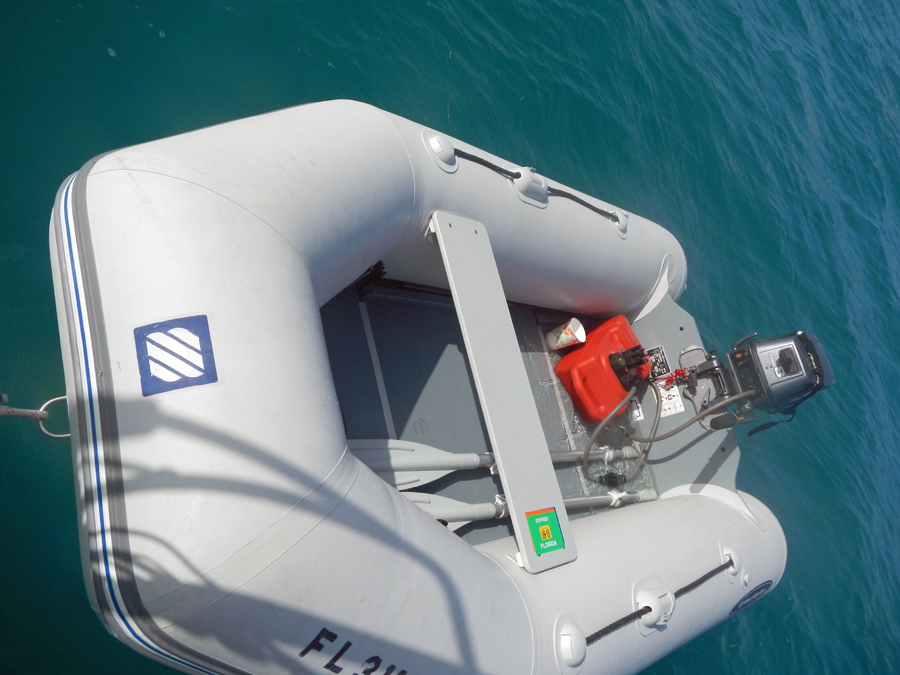
While I am on a mood and on the subject of loathing West Marine, in the Dry Tortugas we found our West Marine brand dingy leaks. The dingy was included in the purchase of Cream Puff and was new. It has been used less than ten times. Com’on West Marine, do you sell anything of quality? Come to think of it, our self inflating life jackets are West Marine brand. I think we should seriously consider replacement of these.


There is a cable that goes from the throttle control unit at the helm to the transmission on the engine. This cable shifts the transmission into neutral, forward and reverse. I will refer you to my Murphy chart I published a while ago. (chart) Do we have a spare? NO. Is it in use at a critical time? YES. We were approaching the Bridge of Lions after asking it to open for us. I went to slow down the engine and discovered we had no reverse gear. We were stuck in forward. We also had no neutral. After a quick inspection of the engine, I could see the cable was broken at the transmission. We passed through the bridge okay. The marina is located right near the bridge. We had deliberately timed our arrival into St. Augustine at slack tide since I read on Active Captain, this marina can be a little tricky due to currents. I managed to get the engine in reverse and radioed the marina to alert them we had engine problems. They changed our slip assignment and assigned us to a slip easier to enter. They also sent three people to help catch lines. (The folks at the City of St Augustine Municipal Marina are awesome – more on this in a later post.) We had one shot to get this right. We circled a couple of times in reverse so I could get a feel of the current. We lined up for the slip and ran hard in reverse. As we approached the slip, I killed the engine, since I had no other way to stop. We gently wafted into the slip and ever so lightly bumped up against the dock. Cindy and the marina guys quickly tied us off and we all sighed with relief. We could not have made a better landing, even with a working transmission. Later, as we were checking in at the office, the Dock Master told us he was about to tell us we should abort our attempt to enter and call a tow boat. He said that after he saw us backing up he felt assured we had the skills to not bump into other boats and changed his mind. If only he knew.


We shut down our ship’s computer. It will not start back up. Today I mailed it in for repairs. The guy that built it for us is an ex-cruiser and will work over the weekend to fix it and return it to us prior to our departure. He is a man that stands behind his product. The computer was custom built for Cream Puff. It is all solid state and has no hard drive or moving parts. It’s nice to know there are still businesses we can count on.


City of St. Augustine Marina

City of St. Augustine Marina


So now here we are in St Augustine. We planned to stay here for a week and to see the sites. Instead, we have about a week’s worth of repairs. Damn it! We are going to stay for two weeks. We both refuse to be enslaved by repairs and not have time to enjoy the sights. At the end of the two weeks we might try this sailing thing again. We both have had a day of feeling absolutely beaten after the last trip. We’ll see how it goes. Perhaps our sun will come out tomorrow.


We Are Here

We Are Here


"If I had a Shotgun..."

Saturday, May 23, 2015

Meals on the Go

One of the questions I am often asked is about food while we are sailing. How do we have meals while we are on trips when we are sailing several days to get to a destination without stopping?  This is a good question because I can see the wheels turning in their minds. How do we cook when the boat is at an angle or rolling from side to side and things are sliding around? The answer depends on the weather.  As well as a lot of trial and error over many years of sailing.


I like to use the example of a mechanical bucking bull. I am sure some of you remember them from back in the 80’s or saw films with mechanical bulls in them. The mechanical bull bucks and tries to send the rider off onto the floor. The floor is cover in padding of some sort. Let’s just say our bull has a speed control of slow, medium, fast and really, really fast (rough).


When the weather is nice, the winds are from a good direction for smooth sailing, the waves are low to medium in height, life is good. We can move around the boat keeping one hand free in case we need to hold on for any unexpected movement like a rogue wave or the wake from another boat. Basically, we can walk and move around without any difficulty. I can stand below comfortably and make a simple meal either on the stove, use the microwave or maybe just make something quick and easy. Everything is just peachy. The bull is on slow speed and life is nice. “Look Mom! No hands!”


The stove has gimbals that allow it to move with the boat while sailing. It also has metal holders to hold pots in place over the propane flame. It is not too difficult to cook if we want to make a hot meal. We have cups that have a low center of gravity so they do not spill and they have non-skid bottoms so they don’t slide around. The cups are insulated which for me is wonderful because I am a person who likes ice in my drinks. Since ice on our boat is a luxury I can have my ice cold drink and drink it too. The cups are great for soups as well.


Medium speed would be rougher seas or stronger winds so maybe just a quick, easy meal. Maybe forget the stove, maybe not depending on the conditions of the weather. We can move around the boat but now we need to be sure to hold on to something stable as we move. Life is still good.


Hey Cindy! What's for supper?!

Hey Cindy! What’s for supper?!


The fast bucking bull means anytime we need to move around we need to hold onto something at all times or wedge ourselves into something so we don’t fall over. This would mean higher waves and stronger winds where the boat is heeling over almost continuously. Or maybe we are experiencing choppy seas where the movement of the boat is hard to anticipate. The bull might move left and then do a quick right and kick up at the tail but not the same move twice just to keep us on our toes or try to knock me off my toes, however you want to see it. This type weather takes planning. Generally we just graze on small, easy to make snacks or meals. I make things ahead of time that I can grab easily and quickly and get back on deck. This is also the time when I can get sea sick so I spend as little time below deck as I can. A friend of mine packs an ice chest so she does not have to go below during rough weather. Smart lady!


I will generally prep the meals and snacks ahead of time while in dock or before the weather changes if we are already out of port sailing. The meals for rougher weather are things like trail mix, a lot of choices of nuts, nutrition bars, hummus, cut up raw veggies, cut up fresh fruit, things you can stuff into pita bread and the like. Things that I’ve already prepared and take little time to grab and pass up top to Mark.


It has been many years since we’ve been in “really, really rough” weather because we have better technology to get better weather forecasts. In order not to tempt Mother Nature I will insert here that we never plan to be in that type weather….but things do happen.


For the most part we try to pick weather windows that will allow us the smoothest sailing for the largest part of our trips. There are times when there will be rougher weather at some point in the trip but we try to pick the best time to leave to avoid as much rough weather as possible. It is important to keep our energy up and wits about us while we are sailing. For this reason we try to eat, sleep and be comfortable along the way. If part of the adventure is just getting there then we would like it to be fun and comfortable. If it turns out not to be fun at least we can be prepared and be safe.


We both love to cook so after we are anchored, moored or docked in our new port we break out the “good stuff” and cook a nice meal. We open a bottle of wine and celebrate another trip completed. The ride is over. Please exit to the left. Thanks for visiting!


Cindy's Favorite Mug

Cindy’s Favorite Mug


Meals on the Go

Ft. Jefferson - The Dry Tortugas National Park

Fort Jefferson

Fort Jefferson


If you look at a map, about 70 miles west of Key West Florida, in the middle of nowhere, you will find The Dry Tortugas National Park. The park consists of 7 small islands and is the southernmost tip of South Florida’s coral reef tract. This represents the third-largest barrier reef system in the world spanning from Biscayne Bay to the Dry Tortugas (the largest is the Great Barrier Reef in Australia followed by Belize’s Barrier reef). The islands were discovered by Juan Ponce de Leon in 1513. He originally named the islands Las Tortugas for the abundance of turtles residing there. Charts later reflected the name Dry Tortugas to warn mariners no water was available. Once charted, they became of great importance to mariners. The islands offered two resources; a safe natural deep water harbor for ships seeking shelter and turtles. At the time, turtles were a favorite food of sailors. They are delicious to eat and can be kept alive for weeks on the deck of a boat by splashing them occasionally with salt water ensuring fresh meat for weeks aboard a ship.


Location - Google Earth


The isles remained under Spanish rule providing merchant ships a landmark into the Gulf of Mexico. Once Florida was acquisitioned in 1822, the United States began planning the creation of a large fort in the Dry Tortugas. The United States believed the 75-mile-wide straits connecting the Gulf Coast and Atlantic Ocean were critical to protect as any forces who tried to occupy the area could gain control over Gulf Coast trading. Extensive surveying and planning continued until construction of Fort Jefferson began in 1847 on Garden Key Island. Although the fort was never fully finished, Fort Jefferson is one of the largest 19th century American masonry coastal forts. By 1860, over $250,000 had been spent and the fort was only halfway completed. Work continued during the Civil War but soon stopped after the war ended. During the Civil War it was used as a military prison, and was used in this way until 1874.


Entrance - One way in and out

Entrance – One way in and out


Looking inside

Looking inside


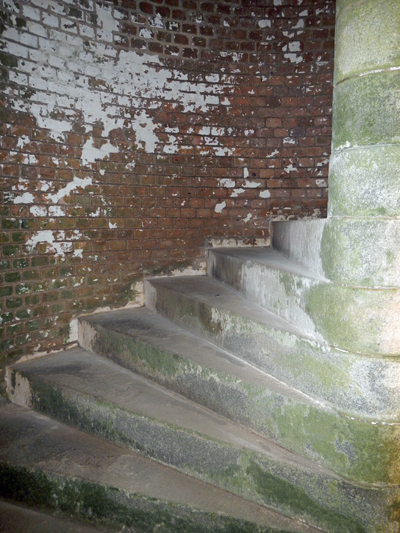
Over 16 million bricks were used in the fort’s construction. Everything had to be brought in by ship. Imagine that for just a second. Everything! The concrete, bricks, water, huge stone slabs for staircases and cannons had to be loaded on ships and sailed 500 miles from Pensacola to the Dry Tortugas where the construction materials were offloaded into smaller dinghies and rowed ashore. The darker upper brick of the fort’s third tier are bricks made in Boston. The fort remained under union control during the US Civil War as construction continued. However, the materials now had to be shipped from the upper east coast making the progress harder and slower.


Huge stones slabs stacked to make up spiral staircases

Huge stones slabs stacked to make up spiral staircases


Cannon Rooms

Cannon Rooms


The design of the fort allows for defense from all sides. At any approach around the fort, 125 cannons can point at a single target. The cannons had a range of about 3 miles and could reload in about a minute. An attacking ship would find themselves with 125 cannon balls a minute raining down upon them.  The cannon balls weighed about 300 pounds and were launched with such thrust they were capable of piercing even iron clad armor of war ships. The outer walls of the fort are 8 feet thick. This made the fort virtually impenetrable by ship cannon fire since it would take about 50 shots to the same part of the wall to make a hole; from a moving ship with limited cannons, an impossibility. The mere power of the fort served as a deterrent and was never attacked making it the thermal nuclear weapon of it time. For the 1800’s this was the ultimate defense technology in practice.


Harbor Light

Harbor Light


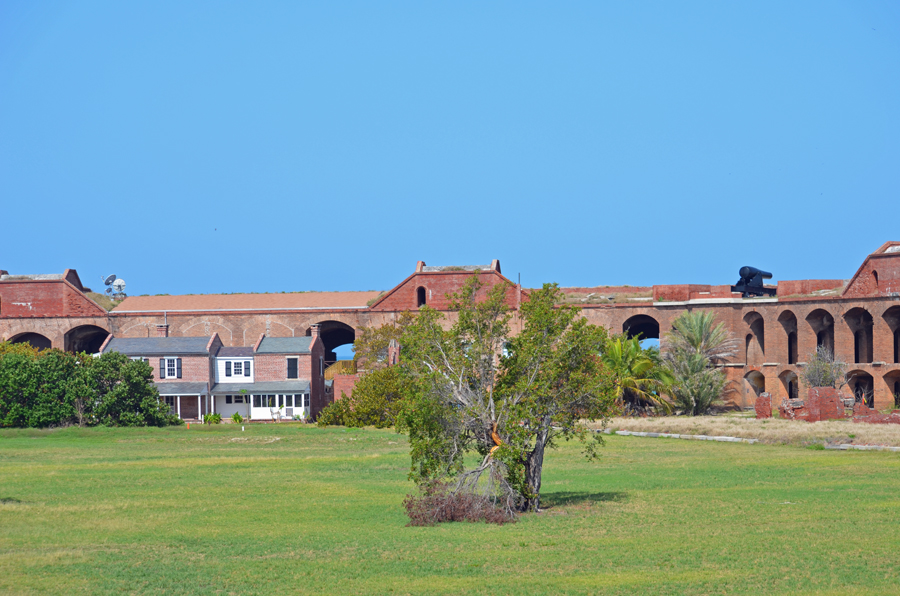
Eras of technology on the roof top - Satellite dish on left and Cannon on right

Eras of technology on the roof top – Satellite dish on left and Cannon on right


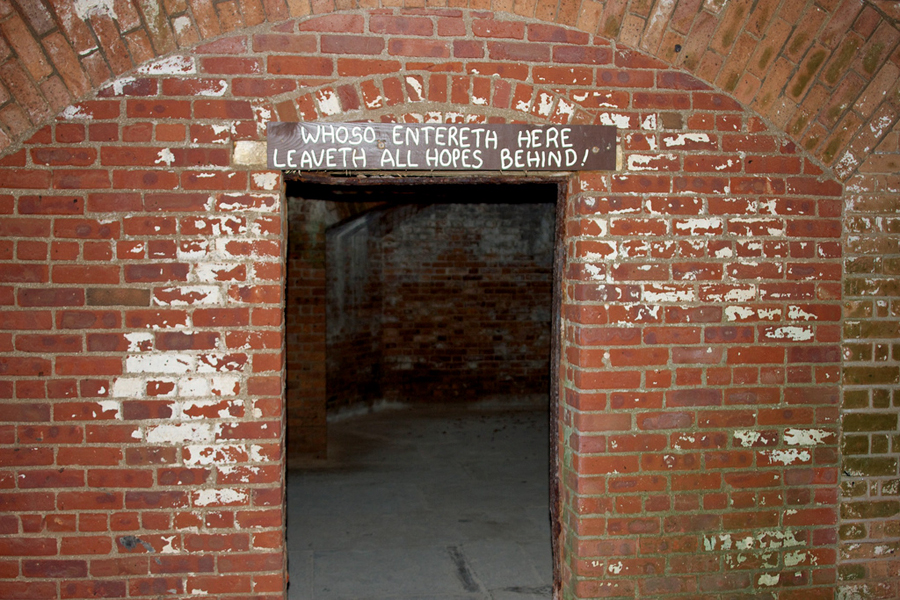
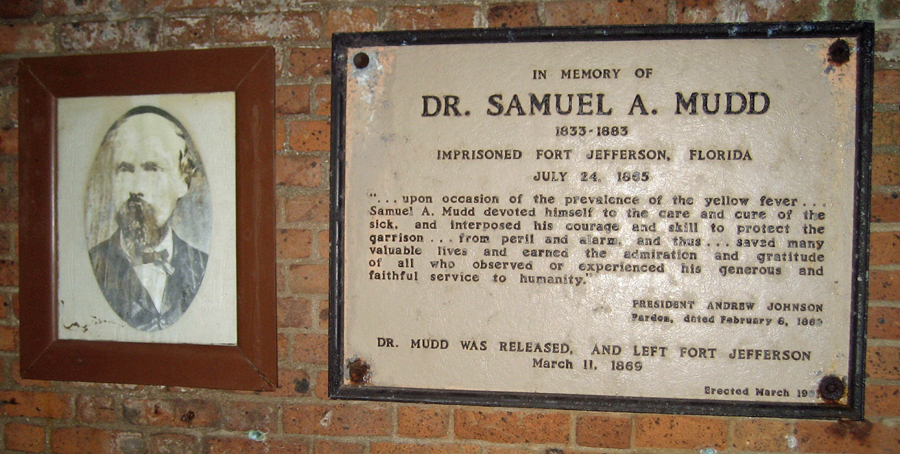
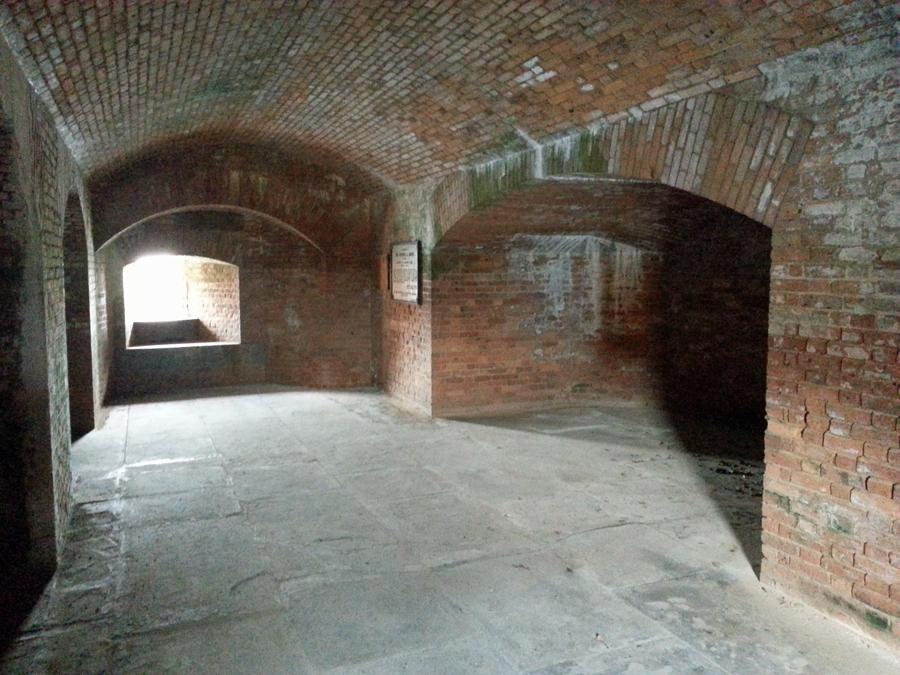
Despite over 30 years of construction, the fort was never truly completed. Advances in weapon technology made the fort obsolete by 1862. Fort Jefferson served for a time as a remote prison facility. One of its most famous inmates was Dr. Samuel Mudd, who set the leg of John Wilkes Booth following the assassination of President Lincoln. Mudd was incarcerated on the Dry Tortugas for four years, from 1865 to 1869. He was released on March 11th, 1869 following a pardon from President Andrew Johnson in part because of his work and research with yellow fever. Yellow fever outbreaks were a common occurrence at the fort and killed many of the guards and medical staff as well as prisoners. The saying, “Your name is Mudd” is attributed to the distrust of Samuel Mudd for his unbeknown role in the treatment of a criminal. Regardless of the Presidential pardon, the saying stuck.


Entrance to Dr. Mudd's cell

Entrance to Dr. Mudd’s cell


Mudd Plaque

Mudd Plaque


Mudd's Cell

Mudd’s Cell


Ft. Jefferson - The Dry Tortugas National Park